The Challenge
Modern hearing aids can connect to many devices, but they cannot connect to Windows PCs and Laptops.
An introductory set of user interviews revealed that users who rely on assistive hearing devices for content on their Windows computers did so by layering multiple audio devices. Each person had a complex (and often complicated) solution to meet their unique needs. The systems were unsatisfactory workarounds that added unnecessary friction for hard of hearing users.
Key Skills
- Workshops with internal and external stakeholders
- Story boarding
- Iterative user studies
- Close collaboration with technical teams
- Coaching collaborators for independent UX development
- Dairy Studies
Exploring the needs of Hard of Hearing Users
We began this work with ethnographic interviews to establish key pain points when using hearing aids on Windows PCs. In the process of interviewing hard of hearing PC users and several audiologists, we learned that even the most incremental improvements from hearing aid technology can have a substantial impact on user experience and the the best audio fidelity comes from direct connection to the audio source–in our case, Windows PCs.
Next we conducted diary studies to get a more detailed understanding of a day in the life of someone navigating their life with hearing aids. We gathered details such as which devices they were using with which software and to describe the challenges they faced. This revealed a complex ecosystem of workarounds for the shortcomings of hearable technology.
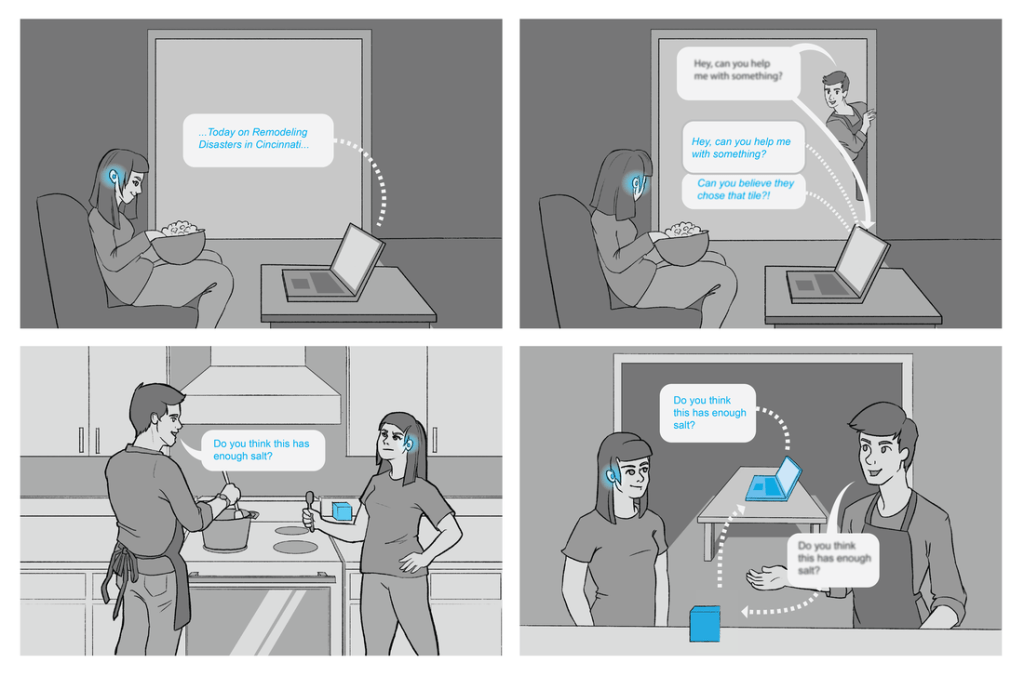
With this information, I brainstormed solutions to the most acute pain points. The top concepts were prototyped through story boarding and used in concept testing for review with users.
Impact
I used feedback from the concept testing to further refine our ideas. The most requested features were developed in collaboration with a hearing aid manufacturer and deployed in a pilot with hearing-impaired individuals.
Hearables on PC in the Press

⇨ Intel Makes Technology More Accessible for People with Hearing Loss
⇨ How Intel is Improving Accessibility for People with Hearing Loss with Darryl Adams
⇨ Intel (INTC) Partners 3DP4ME to Boost Hearing Aid Capabilities
⇨ Intel (INTC) Partners 3DP4ME to Boost Hearing Aid Capabilities
 Becky Chierichetti