
Remote Collaboration: Enhancing communication across the digital divide
The Challenge
As the world abruptly transitioned to remote work in the early days of the pandemic, a critical need emerged: enhancing social connection and communication within a digital landscape. Over two years, I would research three tangents in this theme.
Remote White Boarding
Feedback for video conferencing
AR Enhanced Presentations
The Impact
In addition to authoring several publications, the capabilities developed in this body of work informed product features both internally and with OEM partners of Intel. It produced strong use cases for multiple technologies being developed such as computer vision and gesture recognition.
⇨ Beyond Zoom Fatigue: Ritual and Resilience in Remote Meetings
Key Skills
- Mind mapping
- Interactive prototyping
- Qualitative research
- Design Thinking
- User Testing
- Interdisciplinary collaboration
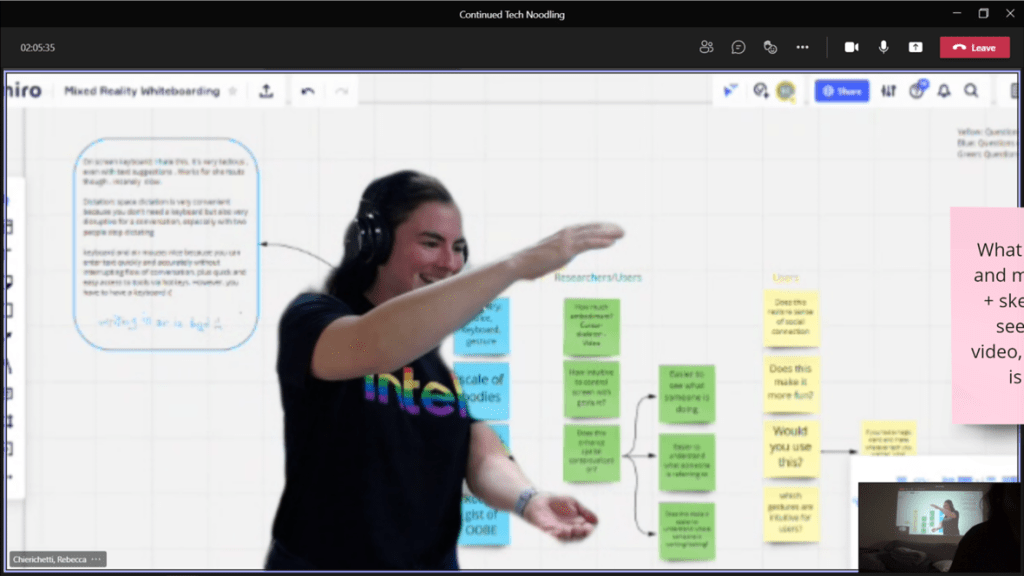
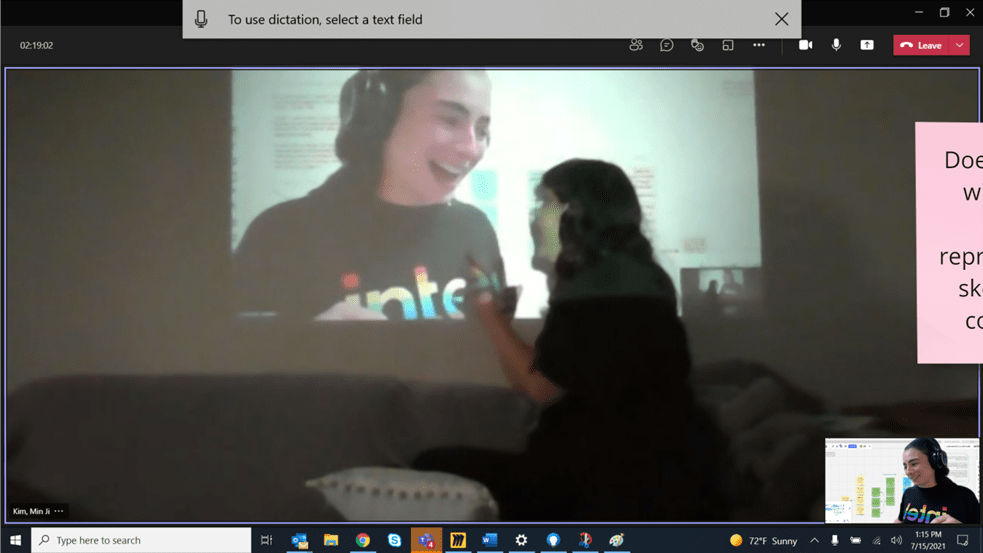
Thread 1: Remote White Boarding
Early research around remote work highlighted a specific hurdle – video calls lacked the intuitive, fluid communication essential for collaborative tasks.
This project tackled the challenge by exploring how embodied interactions in a digital space could enhance the quality of interaction. In this work, we delved into themes of embodiment, virtual representation of self, spatial relationships, and intuitive gesture controls in a gesture-controlled, digital white board.
⇨ Intel Labs Researches the Future of Remote Collaboration


Thread 2: Intuitive Feedback for Video Conferencing
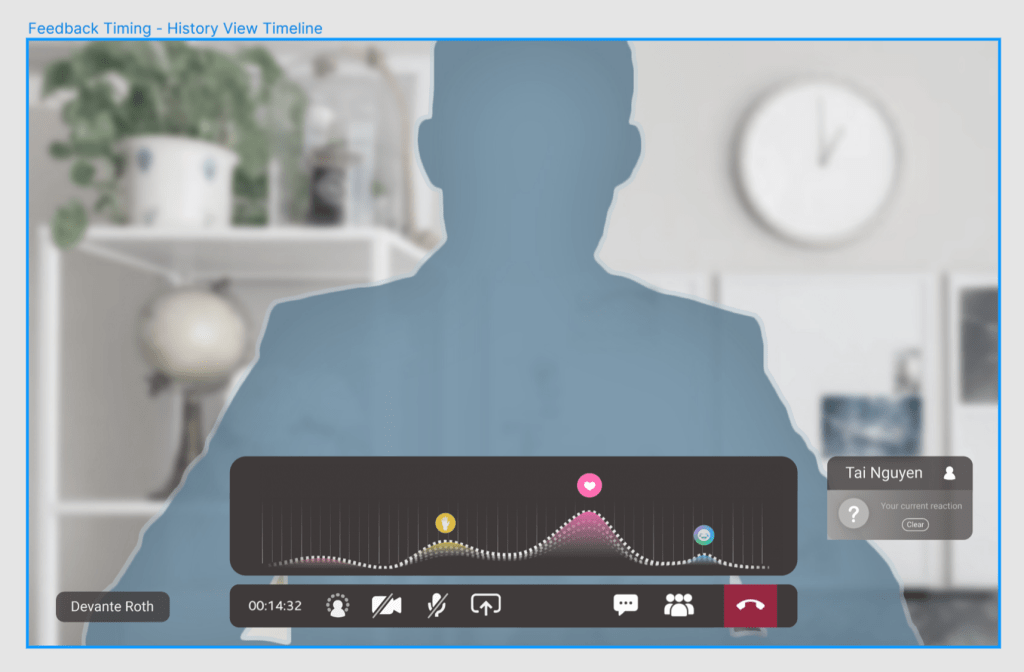
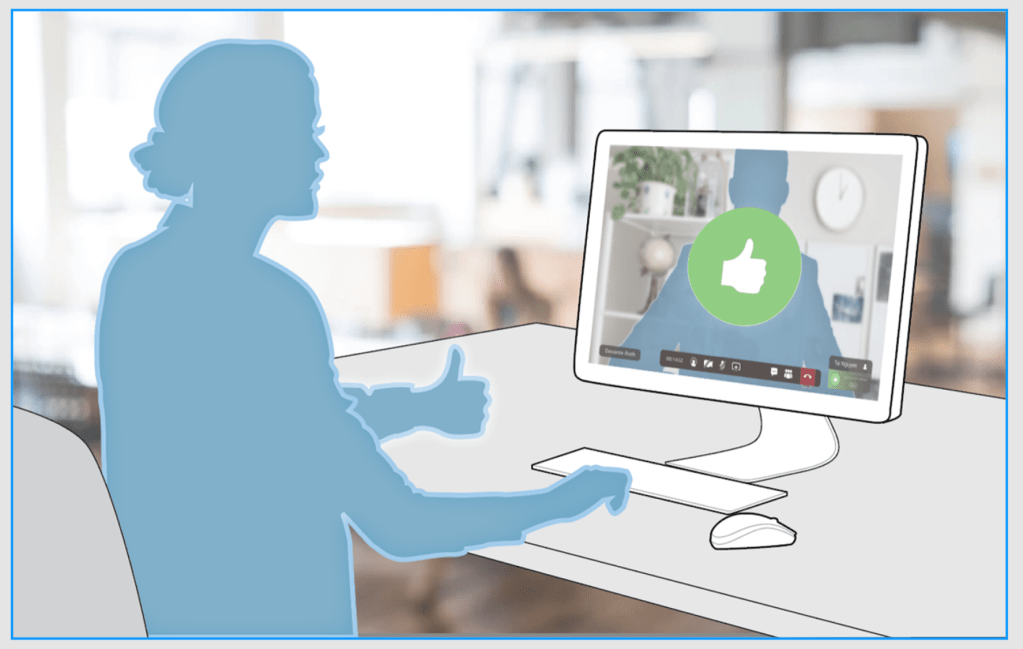
Participants identified large video meetings as a particularly tough place to feel seen and heard.
This project tackled the challenge of providing efficient and natural feedback in crowded virtual environments. Using Figma, we prototyped a video conferencing app for user testing. Using this app, we explored ways to incorporate gestures, voice cues, and other interactive elements into video conferencing platforms.
⇨ Multi-Modal AI Technology Concepts for Non-Verbal Feedback during Remote Work Meetings
.
Thread 3: Augmented Reality meets Digital Presentations
Our research found that certain physical gestures were dearly missed when giving digital presentations.
This thread explored the potential of Augmented Reality (AR) to restore elements of body language to digital talks. I tested an engineering prototype with users and designed an interface and usage instructions from the ground up. Additionally, we tinkered with digital recreations of self for use in virtual spaces.


 Becky Chierichetti
